

Thermal hog hunts have become one of the most effective and ethical methods for controlling wild hog populations. Using advanced thermal imaging technology, hunters can locate and harvest hogs at night with unmatched accuracy, safety, and success rates.
Whether you’re new to hog hunting or looking to upgrade from traditional night vision, this in-depth guide explains how thermal hog hunting works, where it’s legal, what to expect, costs, and why it consistently outperforms other night hunting methods.
What Are Thermal Hog Hunts?
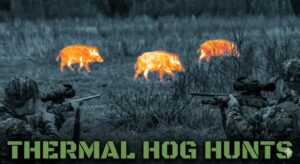
Thermal hog hunts are night hunts that use thermal imaging optics to detect hogs by their body heat rather than visible light. Unlike spotlights or night vision, thermal technology allows hunters to see animals clearly in complete darkness, heavy brush, fog, or tall grass.
Wild hogs are primarily nocturnal, making daytime hunting far less effective. Thermal hunting aligns perfectly with hog behavior, significantly increasing success rates.
Key benefits of thermal hog hunts:
-
Detect hogs instantly, even when hidden
-
No visible light spooking animals
-
Increased safety and target identification
-
Higher harvest success per outing
How Thermal Imaging Works for Hog Hunting
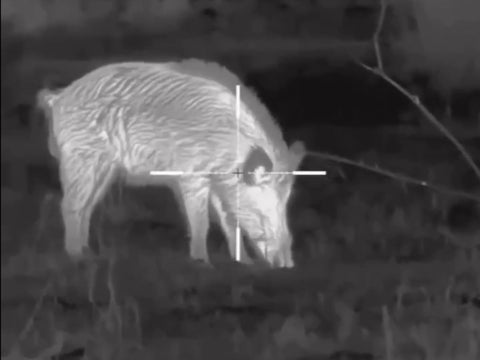
Thermal optics detect infrared heat signatures rather than light. Every warm-blooded animal emits heat, which thermal scopes convert into a visible image.
Why Thermal Is Ideal for Hog Hunting
-
Hogs retain heat and stand out clearly
-
Works in total darkness
-
Effective through brush and vegetation
-
Allows long-range detection
Thermal imaging doesn’t rely on moonlight or ambient conditions, making it reliable year-round.
Thermal Hog Hunts vs Night Vision Hunting
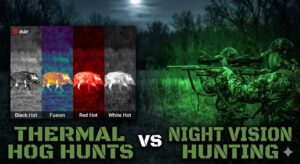
Many hunters compare thermal hog hunting with traditional night vision. While both allow night hunting, the differences are significant.
Thermal Hog Hunting
-
Detects heat, not light
-
Works in zero-light conditions
-
Superior detection range
-
Faster target acquisition
Night Vision Hog Hunting
-
Amplifies ambient light
-
Limited in heavy cover
-
Less effective on moonless nights
-
Shorter detection range
Bottom line: Thermal hunting is more efficient, safer, and far more effective for hog control.
Why Thermal Hog Hunts Are So Effective
Wild hogs cause extensive agricultural and environmental damage. Thermal hog hunting has proven to be one of the most effective population control methods.
Effectiveness Factors
-
Hogs are active at night
-
Thermal prevents hogs from escaping undetected
-
Minimal disturbance to surrounding wildlife
-
Ability to target entire sounders
Many landowners and ranch managers specifically request thermal hog hunts due to their proven results.
Best Locations for Thermal Hog Hunts
Thermal hog hunting is legal in several states, primarily where hogs are classified as invasive or nuisance animals.
Most Popular Regions
-
Private land with landowner permission
-
States with high hog populations
-
Areas allowing night hunting with thermal optics
Private land hunts typically offer the best experience, fewer restrictions, and higher success rates.
Always verify state and local regulations before booking or conducting a thermal hog hunt.
What to Expect on a Guided Thermal Hog Hunt
A guided thermal hog hunt is designed for both beginners and experienced hunters.
Typical Experience Includes
-
Thermal scopes and optics provided
-
Firearms or allowance to use your own
-
Safety briefing and instruction
-
Night hunt duration of several hours
-
Spot-and-stalk or vehicle-assisted hunting
Guides handle setup, tracking, and land access, allowing hunters to focus on the experience.
Who Should Try Thermal Hog Hunting?
Thermal hog hunts are suitable for a wide range of hunters.
Ideal For
-
First-time hog hunters
-
Experienced night hunters
-
Landowners managing hog damage
-
Hunters seeking higher success rates
-
Groups or corporate outings
No prior thermal experience is required when hunting with a professional guide.
Cost of Thermal Hog Hunts
Pricing varies based on location, hunt duration, and group size.
Factors That Affect Cost
-
Private vs shared hunts
-
Equipment included
-
Hunt length
-
Property access
-
Hog population density
Most guided thermal hog hunts fall within a mid-range pricing bracket, reflecting the high cost of thermal equipment and exclusive land access.
Legal Considerations for Thermal Hog Hunts
Thermal hog hunting laws differ by state and property type.
Common Legal Points
-
Thermal optics often legal for hogs
-
Night hunting typically allowed on private land
-
Suppressor use may vary
-
No season limits in many regions
Always confirm regulations with local wildlife authorities or your outfitter before booking.
Frequently Asked Questions About Thermal Hog Hunts
Are thermal hog hunts legal?
Yes, in many states, especially on private land where hogs are classified as invasive.
Do I need my own thermal scope?
No. Most guided hunts provide professional-grade thermal optics.
Is thermal better than night vision for hog hunting?
Yes. Thermal detects heat, making it far more effective in complete darkness and heavy cover.
Can beginners do thermal hog hunts?
Absolutely. Guides provide full instruction and support.
Are thermal hog hunts ethical?
Yes. Thermal hunting allows precise identification and humane harvesting.
Conclusion: Are Thermal Hog Hunts Worth It?
Thermal hog hunts offer unmatched effectiveness, safety, and success for night hog hunting. By leveraging heat-detection technology, hunters can locate hogs instantly, reduce invasive populations, and enjoy a more controlled and ethical hunting experience.