

The Siberian ibex (Capra sibirica), also known as the Asiatic ibex, is one of the most impressive wild mountain goats of Central and South Asia. Its massive curved horns, powerful build and remarkable ability to move across steep rocky terrain make it instantly recognizable.
More importantly, the Siberian ibex is a true high-mountain specialist. Populations occur across some of Asia’s most demanding landscapes, where steep slopes, alpine vegetation, cold winters and dramatic changes in elevation shape almost every aspect of the animal’s life.
This complete guide covers Siberian ibex habitat, range, size, horns, diet, behavior, predators, adaptations and conservation, giving readers a clear understanding of Capra sibirica and what makes this mountain species exceptional.
Siberian Ibex Quick Facts
| Fact | Siberian Ibex |
|---|---|
| Scientific name | Capra sibirica |
| Other common name | Asiatic ibex |
| Family | Bovidae |
| Genus | Capra |
| Primary habitat | Rocky mountains and steep slopes |
| Recorded elevation range | About 500 m to over 5,000 m |
| Adult male weight | Approximately 80–100 kg |
| Adult female weight | Approximately 30–40 kg |
| Male body length | Approximately 130–165 cm |
| Male horn length | Approximately 100–148 cm |
| Diet | Herbivore |
| Major predator | Snow leopard |
The Siberian ibex is considered the largest member of the genus Capra, with substantial differences between mature males and females in body size, weight and horn development.
What Is a Siberian Ibex?
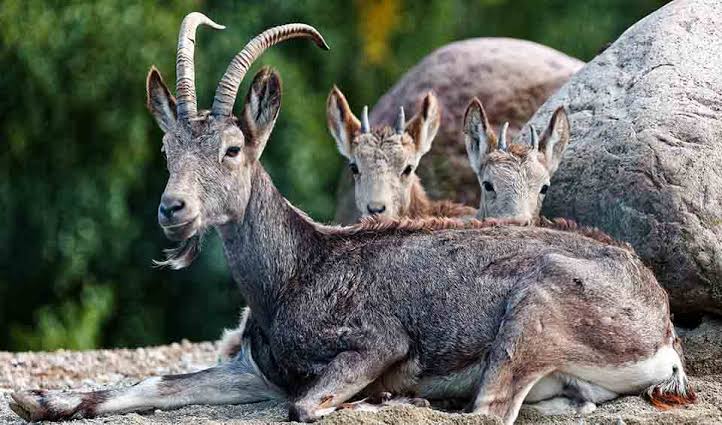
The Siberian ibex is a wild goat adapted to the mountains of Asia.
Its scientific name is Capra sibirica.
Rather than occupying one small geographic region, the species occurs across a huge system of mountain landscapes stretching through Central and parts of South Asia.
Siberian ibex are particularly associated with rocky terrain. Their physical characteristics and behavior allow them to use steep landscapes that would be extremely difficult for many other large mammals to navigate.
Modern ecological research consequently describes the species as an important ungulate of Asia’s highland ecosystems.
What Does a Siberian Ibex Look Like?
A mature Siberian ibex has a powerful, stocky body with a relatively short neck and substantial chest.
However, males and females can look noticeably different.
This is known as sexual dimorphism, meaning the sexes differ considerably in physical characteristics.
Adult males are substantially larger and heavier, and their horns can become dramatically longer than those of females.
Coat coloration can also vary according to sex, age, season and geographic population.
Siberian Ibex Size and Weight
Size is one of the species’ most interesting characteristics.
According to Animal Diversity Web, mature males can measure approximately 130–165 cm in body length, while males generally stand around 80–100 cm at the shoulder.
Adult male weight is approximately 80–100 kg.
Females are considerably lighter, typically weighing around 30–40 kg.
This difference is substantial and helps explain why mature males can appear dramatically more imposing than females.
Siberian Ibex Horns
The horns are probably the most recognizable feature of a mature Siberian ibex.
Male horns form a long backward-curving arc and feature prominent transverse ridges along their front surface.
They can reach approximately 100–148 cm in length.
Female horns are much smaller and thinner, with reported maximum lengths of roughly 37–38 cm.
These extraordinary horn dimensions are one reason mature males are so visually distinctive.
Where Do Siberian Ibex Live?
The geographic range of the Siberian ibex is enormous.
Populations occur across mountain systems throughout Central and northern Asia, extending into parts of South Asia.
Documented range countries and regions include:
- Mongolia
- Kazakhstan
- Kyrgyzstan
- Tajikistan
- Russia
- China
- Afghanistan
- Pakistan
- Parts of India
- Uzbekistan
Rather than forming one continuous population everywhere, Siberian ibex occur in different mountain populations spread across this enormous range.
Siberian Ibex Habitat
The Siberian ibex habitat is one of the most important things to understand about the species.
These animals are strongly associated with:
- Rocky mountains
- Steep slopes
- Alpine meadows
- Rocky scree
- Mountain steppe
- Cliffs and rocky outcrops
- Semi-desert mountain environments
Animal Diversity Web reports Siberian ibex occurring from approximately 500 meters to more than 5,000 meters above sea level, although elevation varies substantially between mountain systems and seasons.
Research from the Himalayan region similarly associates ibex with dry, rocky mountain landscapes and alpine meadows.
Why Steep Terrain Matters
The extreme terrain isn’t simply where Siberian ibex happen to live.
It is fundamental to their survival.
Rocky slopes can provide escape terrain when predators approach. Their bodies are adapted to moving efficiently across these surfaces.
The hooves have soft, elastic pads surrounded by harder material, improving traction on rock.
This gives Siberian ibex an impressive ability to negotiate steep landscapes where many larger animals would struggle.
Siberian Ibex in Mongolia
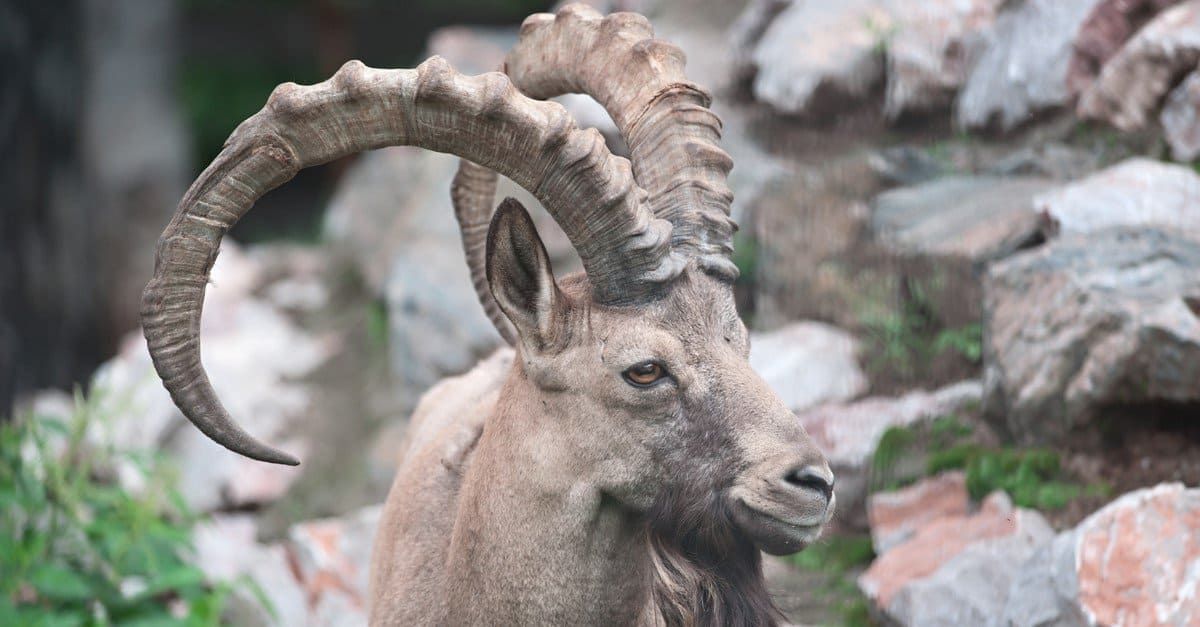
Mongolia forms an important part of the Siberian ibex’s overall Asian distribution.
The country’s combination of mountains, steppe and comparatively arid landscapes provides habitat for distinct populations of Capra sibirica.
Animal Diversity Web specifically identifies multiple populations in Mongolia and China, alongside populations distributed through the Central Asian mountain ranges toward Afghanistan and Pakistan.
This enormous geographic distribution also explains why habitat conditions can differ considerably between individual populations.
Siberian Ibex in Pakistan
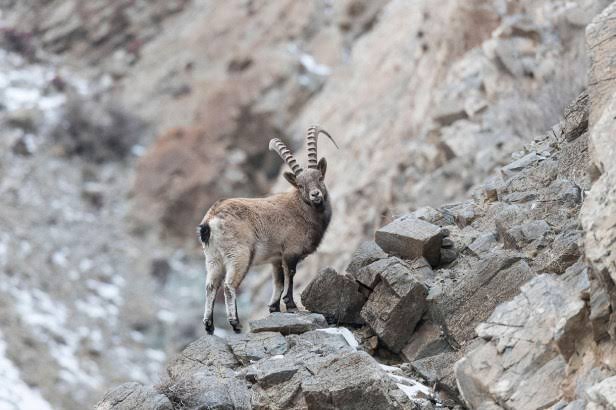
Siberian or Asiatic ibex also occur within Pakistan’s northern mountain systems.
Research identifies populations in areas associated with the Karakoram, Himalaya and Hindu Kush mountain systems.
Studies have documented habitat including rocky mountain areas, cliffs, alpine meadows and dry high-altitude landscapes.
These landscapes demonstrate just how specialized the species is for life in rugged mountain environments.
What Do Siberian Ibex Eat?
The Siberian ibex diet is entirely plant-based.
They are herbivores and consume a broad variety of mountain vegetation.
Researchers have documented roughly 140 plant species in their diet.
Depending on location and season, foods can include:
- Grasses
- Leaves
- Shoots
- Stems
- Flowers
- Fruits
- Lichens
- Tree buds and needles
Green grasses become particularly important during spring and summer.
Winter creates a different challenge because snow can cover much of the available vegetation. Siberian ibex may favor south-facing slopes where reduced snow depth makes food easier to reach.
How Their Diet Changes With the Seasons
Seasonality is important throughout Siberian ibex ecology.
Spring and summer provide greater access to green vegetation.
As conditions change through autumn, animals consume available grasses, stems, shoots and leaves.
Winter forces them to make use of whatever vegetation remains accessible, including buds and needles.
This ability to alter feeding behavior is essential for an animal living in environments where winter can dramatically reduce available food.
Siberian Ibex Behavior
Siberian ibex are social animals.
They commonly occur in groups, although group structure and size vary according to sex, season, food availability and location.
Groups of roughly 5–30 animals are commonly reported, although substantially larger gatherings can sometimes occur.
Research has also found differences between males and females in habitat selection, feeding areas and social organization.
Much of their daily activity revolves around feeding and resting.
Male and Female Siberian Ibex
Male and female Siberian ibex differ in more than appearance.
Researchers have identified differences in:
- Body size
- Horn size
- Feeding behavior
- Habitat selection
- Group structure
- Vigilance
- Seasonal behavior
Females caring for young may prioritize areas that combine nutritious vegetation with greater security from predators.
Males can use habitat differently, particularly during periods when food is abundant.
These behavioral differences help reduce competition within populations.
Siberian Ibex Predators
Despite their size and mountain agility, Siberian ibex still face natural predators.
One of the most important is the snow leopard.
Other documented predators across their range can include wolves and brown bears, while younger animals may face additional predators.
Research from Kyrgyzstan has confirmed Siberian ibex as prey within mountain predator communities involving snow leopards and wolves.
This relationship gives the ibex an important ecological role extending far beyond the species itself.
Siberian Ibex and Snow Leopards
The relationship between Siberian ibex and snow leopards deserves particular attention.
Both species are exceptionally well adapted to mountainous environments.
Siberian ibex can represent an important prey species for snow leopards, meaning healthy populations of mountain ungulates can contribute to the broader stability of predator populations.
Animal Diversity Web identifies snow leopards as a particularly important predator of Capra sibirica.
This predator-prey relationship is one reason ibex conservation can affect an entire mountain ecosystem.
How Siberian Ibex Survive Extreme Mountains
Living at elevations that can exceed 5,000 meters requires specialized adaptations.
Their survival advantages include:
Powerful bodies: Help them navigate demanding terrain.
Specialized hooves: Provide traction across rocky surfaces.
Mountain agility: Allows rapid movement through steep escape terrain.
Seasonal movement: Enables populations to respond to changing snow and food availability.
Flexible diet: Allows them to use different vegetation throughout the year.
Social awareness: Group living can help animals detect approaching predators.
Together, these characteristics make Capra sibirica one of Asia’s most specialized mountain ungulates.
Do Siberian Ibex Move to Lower Elevations in Winter?
They can.
High-mountain conditions change substantially between summer and winter.
When snow makes vegetation difficult to access, Siberian ibex may move toward lower slopes or locations where food remains available.
Research also indicates that they frequently favor south-facing slopes during winter because lower snow accumulation can leave more vegetation exposed.
This means the elevation where ibex are observed isn’t necessarily constant throughout the year.
Why Siberian Ibex Matter to Mountain Ecosystems
Siberian ibex are more than impressive mountain animals.
As herbivores, they influence vegetation through grazing and browsing.
As prey, they contribute to food webs supporting major predators.
Their ecological importance becomes particularly clear in Central Asian mountain systems where relatively few large prey species may be available to carnivores.
Scientific research has specifically highlighted Asiatic ibex as an important ungulate within highland ecosystems.
Threats to Siberian Ibex
The species occupies enormous landscapes, but that doesn’t mean every population is equally secure.
Research has identified pressures including:
- Habitat degradation
- Competition with domestic livestock
- Human disturbance
- Illegal killing
- Climate-related habitat changes
- Increasing access to previously remote mountain areas
A 2022 ecological review specifically highlighted anthropogenic activity and climate-related habitat loss among the challenges facing Asiatic ibex populations.
Population conditions can also differ significantly between regions, making local conservation information important.
Siberian Ibex Conservation
Conservation should be understood at the population and ecosystem level rather than from a single global number.
Maintaining suitable mountain habitat is important not only for Siberian ibex but also for predators and other species sharing the same landscapes.
Protected areas, population monitoring, habitat management and controls against illegal killing can therefore play important roles.
Older references sometimes provide population estimates or conservation descriptions that no longer represent current knowledge. For an evergreen article, current scientific assessments should be favored over decades-old estimates.
Siberian Ibex vs. Other Ibex
The word ibex doesn’t refer to only one animal.
Several related mountain goat species occur in different parts of Europe, Africa and Asia.
The Siberian ibex stands out because of its:
- Large body size
- Extremely long male horns
- Vast Central Asian distribution
- Adaptation to high elevations
- Association with steep rocky terrain
Its combination of size, range and mountain specialization makes Capra sibirica particularly distinctive within the genus.
Why the Siberian Ibex Is So Remarkable
Three characteristics make this species especially impressive.
First is scale. Mature males are substantial animals and possess exceptionally long horns.
Second is terrain. Siberian ibex inhabit some of the most rugged mountain environments in Asia.
Third is adaptation. Their hooves, body structure, seasonal movements, diet and social behavior all contribute to survival in landscapes where conditions can change dramatically.
It is this combination rather than any single characteristic that makes the Siberian ibex such a fascinating mountain species.
Frequently Asked Questions About Siberian Ibex
What is the scientific name of the Siberian ibex?
The scientific name is Capra sibirica.
Is the Siberian ibex also called the Asiatic ibex?
Yes. Asiatic ibex is another commonly used name for Capra sibirica.
Where do Siberian ibex live?
Their range extends across mountain regions of Central and parts of South and northern Asia, including Mongolia, China, Kazakhstan, Kyrgyzstan, Tajikistan, Russia, Afghanistan and Pakistan.
What is the Siberian ibex habitat?
They primarily inhabit rocky mountains, steep slopes, alpine meadows, scree and related highland environments.
How high can Siberian ibex live?
Recorded habitat extends from roughly 500 meters to more than 5,000 meters above sea level, although this varies considerably by region and season.
How big is a Siberian ibex?
Mature males can reach approximately 130–165 cm in body length and weigh around 80–100 kg.
How long are Siberian ibex horns?
Male horns have been reported at approximately 100–148 cm. Female horns are considerably smaller.
What do Siberian ibex eat?
They are herbivores consuming grasses, leaves, shoots, stems, flowers, fruits and other available mountain vegetation.
What animals prey on Siberian ibex?
Snow leopards are particularly important natural predators. Wolves and other large predators can also prey upon them depending on region.
Why are Siberian ibex good mountain climbers?
Their body structure and specialized hooves provide excellent traction and mobility on steep rocky surfaces.
Final Thoughts
The Siberian ibex is one of Asia’s most distinctive mountain mammals.
From males weighing around 80–100 kg and carrying exceptionally long horns to populations surviving above 5,000 meters, almost every aspect of the species reflects adaptation to difficult highland environments.
Its broad Asian distribution also means there isn’t one single “Siberian ibex environment.” Populations experience different climates, elevations, vegetation and ecological pressures across Mongolia, Central Asia, China, Afghanistan, Pakistan and neighboring regions.
Understanding those differences is what turns a basic species overview into a genuinely useful guide to Capra sibirica.