The bull moose is one of the largest and most impressive animals found across the northern wilderness. Massive body size, long legs and broad palmate antlers make a mature bull instantly recognizable, but there is much more to these animals than their appearance.
Across Alaska and Canada, bull moose live in very different landscapes, from river bottoms and wetlands to boreal forests and remote northern lake systems. Their size, antler development, movements and behavior can also vary considerably according to age, nutrition, habitat and geographic region.
For anyone researching bull moose, understanding these regional and seasonal differences is essential.
What Is a Bull Moose?
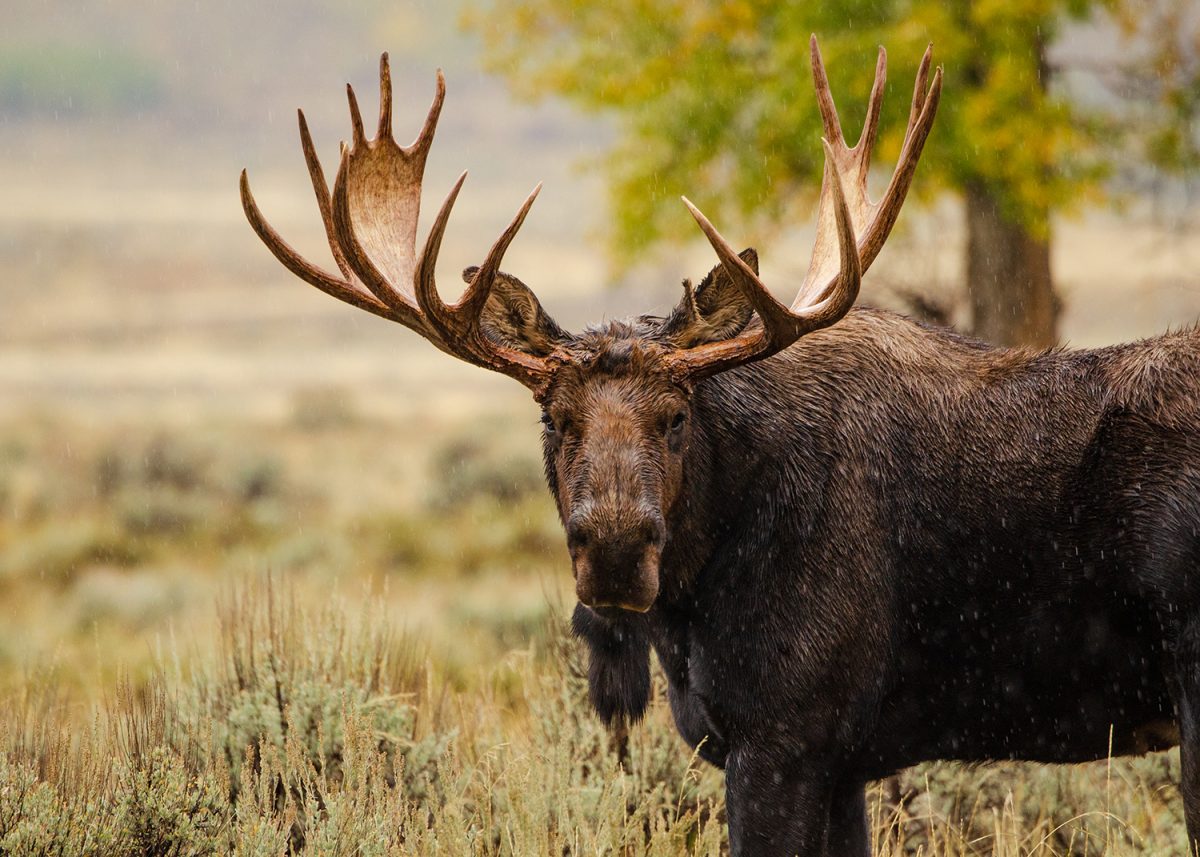
A bull moose is an adult male moose (Alces alces).
Adult females are called cows, while young moose are calves. Moose are the largest living members of the deer family.
One of the clearest characteristics separating mature bulls from cows is antler development. Male moose normally grow a completely new set of antlers every year.
Their bodies are also remarkably well adapted to northern environments. Long legs help them travel through snow, wetlands and shallow water, while their diet allows them to use vegetation available across dramatically changing seasons.
How Big Is a Bull Moose?
Bull moose size varies according to subspecies, location, genetics, age and available nutrition.
The largest North American bulls occur in Alaska and northwestern Canada. Large Alaska bulls can approach 1,600 pounds and stand roughly 6 to 7 feet at the shoulder.
That enormous body size is supported by an equally impressive skeletal structure and long legs.
However, readers should not assume every mature bull reaches those measurements. Regional populations can differ substantially.
Bull Moose Antlers
Antlers are perhaps the most recognizable feature of a mature bull.
Bulls begin developing a new set during the warmer part of the year. Early antler growth is covered by velvet containing blood vessels that support rapid development.
As fall approaches, the antlers harden and the velvet disappears.
Large Alaska bulls can develop antlers approaching seven feet across, although such measurements represent exceptionally large animals rather than an average bull.
After the breeding season, bulls eventually shed their antlers and repeat the growth cycle the following year.
Does Antler Size Tell You a Bull Moose’s Age?
Not exactly.
Age influences antler development, but genetics, nutrition, health and habitat quality also matter.
Young bulls generally carry smaller antlers than fully mature animals. As a bull reaches maturity, antler mass and overall development can increase significantly.
For this reason, antler width alone should never be treated as an exact age measurement.
Where Do Bull Moose Live?
North American moose are primarily associated with northern environments.
Important habitat features commonly include:
- Boreal and mixed forests
- Willow and shrub growth
- Wetlands and marshes
- Lakes and ponds
- Rivers and streams
- Areas containing abundant young vegetation
- Forest cover suitable for seasonal protection
Water and wetlands are particularly important parts of moose habitat.
Moose are capable swimmers, and during warmer periods they may spend considerable time around lakes, ponds and other aquatic environments.
Bull Moose in Alaska
Alaska contains some of North America’s most impressive bull moose habitat.
Hunt Nation’s existing regional material describes Alaska moose country ranging from remote river and lake systems to mountainous wilderness. Its Alaska catalog also includes several areas where Alaska-Yukon moose occur alongside other northern wildlife.
Alaska-Yukon moose are the largest moose found in North America.
The state’s enormous size also means there is no single type of Alaska moose habitat. Some animals occupy river valleys and wetlands, while others occur near foothills and forested environments.
Food availability, winter severity, habitat conditions and predators can all influence local populations.
Northern Manitoba Bull Moose
Northern Manitoba provides a very different environment.
Remote lake systems, boreal forest, wetlands and relatively isolated wilderness characterize large portions of northern Manitoba.
This combination can provide important moose habitat because animals have access to both woody vegetation and aquatic environments.
Northern Manitoba’s extensive lakes and boreal forests are particularly important features of the regional landscape.
This is also a useful example of why Canadian moose should not all be grouped together. A bull living around remote Manitoba lakes experiences a different environment from an animal occupying mountainous western Canada.
Newfoundland Bull Moose
Newfoundland represents another distinctive Canadian moose environment.
The island contains extensive forest, wetlands and other habitat suitable for moose.
Long legs are particularly useful in northern environments because they help moose travel through deep snow, while their ability to consume woody vegetation allows them to survive when many softer plants are unavailable.
Newfoundland therefore provides another useful example of how adaptable moose can be when suitable food and habitat are available.
Bull Moose in British Columbia
British Columbia adds yet another landscape to the picture.
Hunt Nation’s regional material describes northern British Columbia moose country containing rivers, lakes, boggy lowlands and mountainous terrain.
This variety demonstrates that moose are not limited to flat wetlands.
Suitable food, cover and access to water can support animals across considerably different terrain.
Bull Moose in Alberta
Alberta also supports moose across suitable northern and forested habitat.
Hunt Nation’s current catalog includes Alberta material featuring bull moose and other wildlife, reinforcing the broad geographic distribution of moose across western Canada.
Regional conditions remain important because habitat, winter severity and vegetation can differ significantly even between neighboring Canadian provinces.
What Do Bull Moose Eat?
Despite their enormous size, moose are herbivores.
Their diet commonly includes:
- Willow
- Birch
- Aspen
- Leaves
- Twigs
- Shoots
- Shrubs
- Forbs
- Aquatic vegetation
Diet changes throughout the year according to what vegetation is available.
During colder months, woody browse becomes especially important. During spring and summer, fresh leaves and aquatic plants can provide additional nutrition.
Bull Moose Behavior
Bull moose are commonly solitary outside the breeding period.
Much of their normal routine revolves around feeding, resting and moving between suitable habitat.
Their behavior changes significantly during fall.
Adult bulls become more active as the breeding season approaches, and interactions between animals increase.
Because moose are extremely large and powerful wild animals, people should always observe them from a safe distance.
When Does the Bull Moose Rut Occur?
The annual breeding period is known as the rut.
Across northern North America, timing varies somewhat with location, but late September and early October are particularly important periods for rutting activity in many populations.
During this period, bulls become more active.
The rut can also place substantial physical demands on mature males, making the period immediately before winter an important stage of their annual cycle.
How Bull Moose Survive Winter
Winter survival requires several adaptations.
Their long legs allow them to travel through snow more effectively than many other large mammals.
Diet also changes.
When fresh vegetation disappears, woody browse such as willow, birch and aspen becomes increasingly important.
Moose may also use forest cover differently as winter conditions become more severe.
Energy conservation matters because moving through deep snow requires considerably more effort.
Bull Moose vs. Cow Moose
Several characteristics distinguish mature bulls and cows.
Antlers are the clearest visible difference during much of the year.
Bulls normally grow antlers while cows do not.
Adult bulls also tend to have larger bodies, although individual size varies enough that body dimensions should not be the only identification method.
Behavior differs as well. Cows spend significant periods caring for calves and can become highly defensive when young animals are nearby.
Why Bull Moose Habitat Matters
Healthy habitat is essential for healthy moose populations.
The most useful landscapes often provide a combination of food, forest cover, wetlands and seasonal protection.
Changes to any of these resources can influence animal condition and population trends.
Important environmental pressures can include:
- Severe winters
- Habitat changes
- Food availability
- Predation
- Parasites and disease
- Wildfire and forest succession
- Human development
- Vehicle collisions
- Changing climate conditions
These pressures are not identical everywhere, which is why population trends must be understood region by region.
Important Bull Moose Facts
- A bull moose is an adult male moose.
- Moose are the largest living members of the deer family.
- Alaska-Yukon moose are the largest North American moose.
- Exceptional Alaska bulls can approach 1,600 pounds.
- Large bulls can stand roughly 6 to 7 feet at the shoulder.
- Exceptional antlers can approach seven feet across.
- Bulls grow and shed antlers on an annual cycle.
- Moose are herbivores.
- Willow, birch and aspen are important food sources.
- Moose are strong swimmers.
- Long legs help them travel through deep snow and wetlands.
- Late September and early October are important rutting periods in many northern populations.
- Alaska, Manitoba, Newfoundland, British Columbia and Alberta all contain moose habitat, but environmental conditions differ considerably between these regions.
Frequently Asked Questions About Bull Moose
What is a bull moose?
A bull moose is an adult male moose. Mature bulls are usually distinguished by their larger bodies and annual antler development.
How big can a bull moose get?
The largest Alaska bulls can approach 1,600 pounds and stand roughly 6 to 7 feet at the shoulder.
How large can bull moose antlers become?
Exceptional Alaska bull antlers can approach seven feet across, although most animals do not reach this extreme size.
Do bull moose lose their antlers?
Yes. Bulls shed their antlers and grow another set as part of their annual biological cycle.
What does a bull moose eat?
Moose consume vegetation including willow, birch, aspen, leaves, shoots, twigs and aquatic plants. Their diet changes seasonally.
Where do the largest bull moose live?
Some of the largest occur in Alaska and northwestern Canada, within the range of the Alaska-Yukon moose.
Where do bull moose live in Canada?
Moose occur across large portions of Canada. Manitoba, Newfoundland, British Columbia and Alberta are among the regions containing substantial suitable habitat.
Can bull moose swim?
Yes. Moose are strong swimmers, and aquatic environments are an important component of their habitat.
Are bull moose dangerous?
They are powerful wild animals and should never be approached closely. Extra caution is appropriate during periods when animals are particularly defensive or active.
Final Thoughts
The bull moose is much more than a huge member of the deer family with impressive antlers.
From Alaska’s enormous Alaska-Yukon moose to animals living around the remote lakes of Manitoba, forests of Newfoundland and varied landscapes of western Canada, regional differences are a major part of understanding this species.
Body size, antler development, diet, behavior and population health are influenced by age, genetics, nutrition, habitat and geographic location.
Understanding those factors gives readers a far more useful picture of bull moose than simply focusing on antler size.