A 3% surcharge will be added to all transactions.


If you’re planning a Wyoming elk, mule deer or antelope hunt, understanding the state’s preference-point system can be almost as important as choosing the right outfitter.
The answers aren’t always simple.
A hunter with three points may have excellent opportunities available today, while another hunter with 10 or 15 points may be better served by continuing to build points for a specific hunt. And having more points doesn’t necessarily mean you’re choosing a better hunting experience.
The key is understanding what your points can actually get you.
Hunt Nation has been helping hunters navigate Wyoming hunting opportunities for more than 27 years. We work with multiple Wyoming outfitters and ranches, allowing us to help match your preference points, budget, trophy expectations, physical ability and preferred hunting style to the right opportunity.
Wyoming preference points reward hunters who have accumulated points over time by giving them greater priority for certain licenses.
For nonresident full-price elk, deer and antelope licenses, Wyoming divides licenses in the preference-point system between two drawings:
Seventy-five percent of the available licenses in the preference-point system are issued according to preference-point ranking.
Applicants with the most points receive priority.
The remaining 25% are issued through a random drawing.
That distinction is extremely important because it means:
You can potentially draw a Wyoming license with zero preference points.
After the preference-point portion is completed, unsuccessful applicants participate in the random drawing for the remaining licenses. Therefore, hunters without enough points to compete in the preference draw can still have a chance—although the odds for highly sought-after hunts may be small.
Wyoming Game & Fish publishes previous drawing results and odds, which are one of the best tools for estimating how competitive a particular hunt has been.
View Official Wyoming Draw Results & Odds
Important: Previous draw odds are a planning tool, not a guarantee of what will happen next year.
For the species we’re discussing here, Wyoming preference points are primarily important to nonresident hunters.
Nonresidents can accumulate preference points for: Elk • Deer • Antelope
Wyoming residents do not need preference points for elk, deer and antelope.
This article therefore focuses primarily on nonresident Wyoming hunters.
This is probably the question we hear most often.
And there is no single number.
The number of points needed for a Wyoming elk license depends on factors including:
**Some Wyoming elk opportunities can be accessible with relatively few points, while highly sought-after limited-quota hunts can require many years of accumulated points.
isn’t quite the right question.
A better question is:
That’s a question Hunt Nation can help answer.
Wyoming’s point pool is substantial. Going into the 2026 draw, WGFD reported tens of thousands of nonresident elk applicants at many point levels—including more than 39,000 hunters holding one point and thousands holding 10 or more.
That creates what hunters commonly refer to as point creep: the number of points historically needed for a hunt can increase as applicants continue accumulating points and competing for the same licenses.
A hunt requiring 12 points isn’t automatically twice as good as one requiring six.
Access, outfitter quality, private land, elk numbers, season timing, terrain, hunting pressure and trophy expectations all matter.
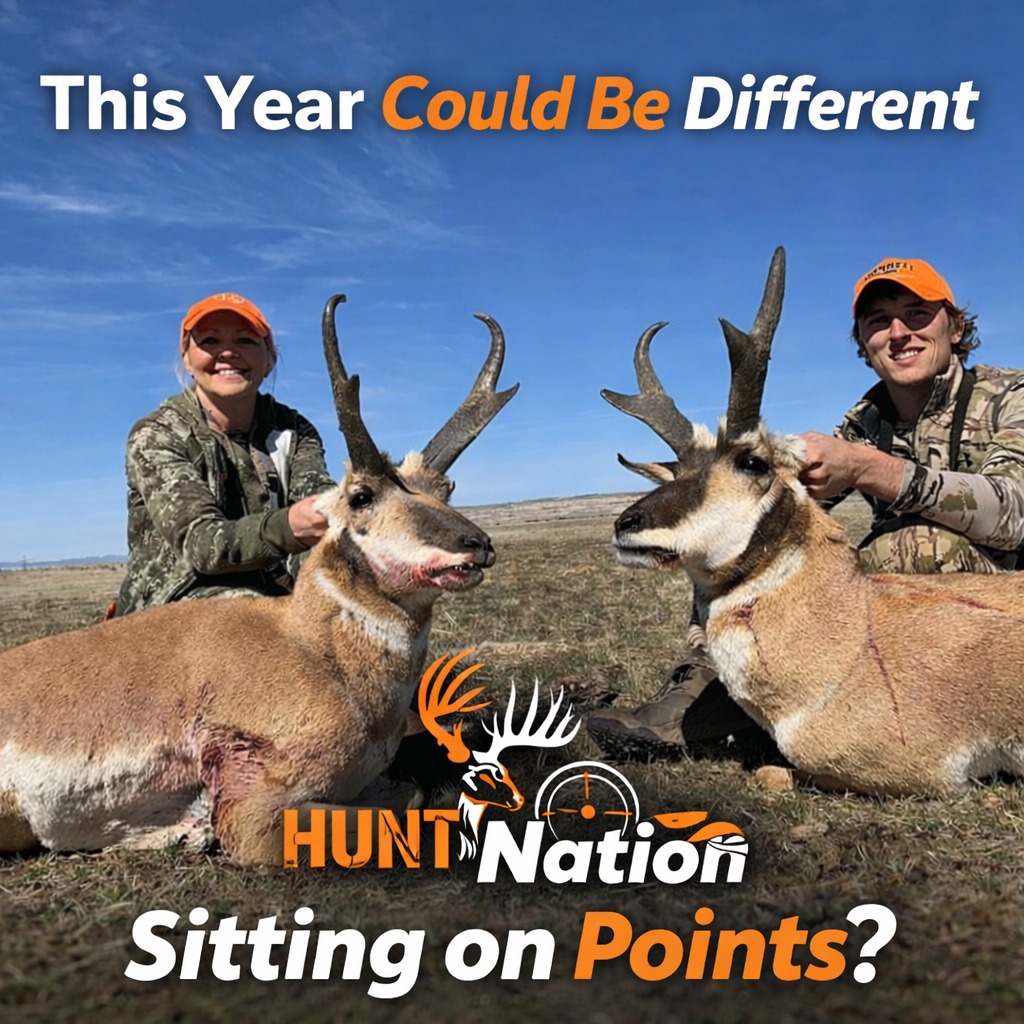
Wyoming antelope can provide some of the most interesting opportunities for hunters who want to actually use their points rather than simply accumulate them.
Point requirements vary tremendously by hunt area.
Some areas are highly sought after because of trophy potential, public-land access or reputation. Other areas may be easier to draw but have access limitations that make a quality private-land hunt particularly valuable.
This is an area where Hunt Nation has considerable experience.
For example, we’ve worked with one Wyoming antelope property for approximately 20 years and sent roughly 350 hunters there. That kind of history gives us a much better understanding of the actual hunting experience than simply looking at last year’s draw statistics.
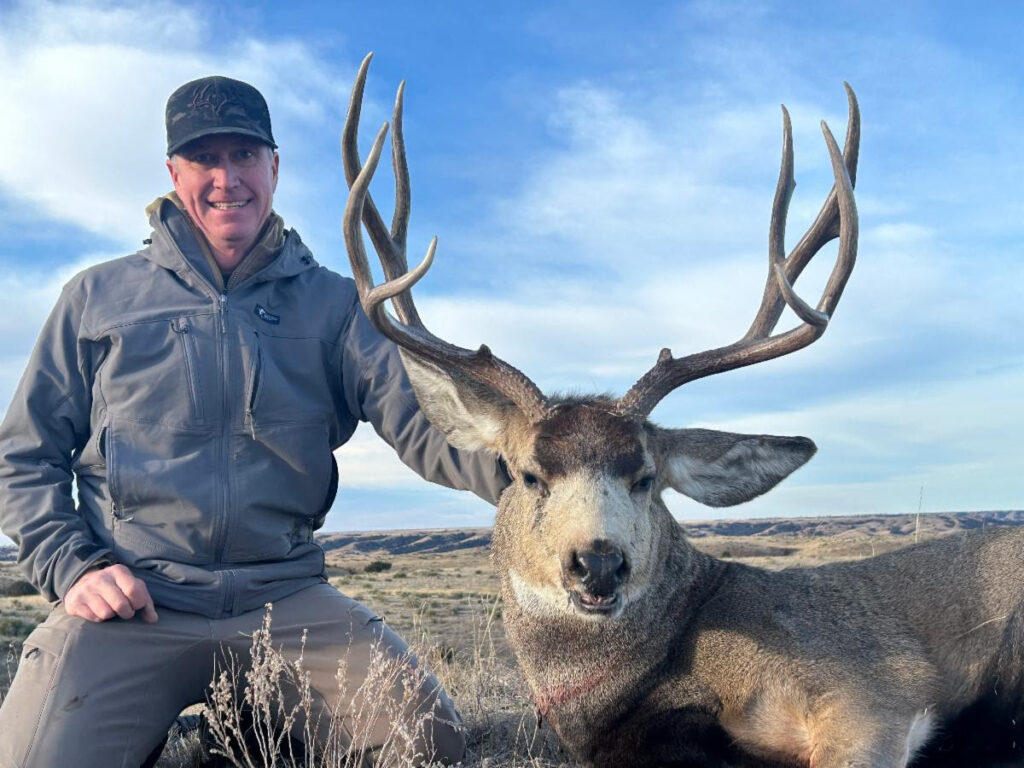
Wyoming deer preference points operate under the same broad concept for nonresident full-price licenses, but point requirements can vary dramatically depending on the area and license.
Some premium mule deer opportunities can be extremely competitive.
Other private-land or less-publicized opportunities may be accessible with considerably fewer points.
Hunters should also remember that last year’s drawing threshold doesn’t guarantee the same result this year.
Before committing years of accumulated points, compare the actual hunt you’re considering with other opportunities available at your point level.
This is another source of confusion.
For nonresident full-price elk, deer and antelope, Wyoming has Regular and Special license drawings.
The Special license does not give you a different animal, a better season or a better tag.
The difference is primarily the license fee and the applicant pool.
Applicants willing to pay the higher Special license fee compete against other Special applicants rather than applicants in the Regular drawing.
Because fewer—or simply different—hunters may enter the Special pool, the drawing odds can sometimes differ significantly.
But don’t automatically assume: “Special = easier to draw.”
In some areas, paying for the Special application may improve your odds. In others, the difference may be small or the historical odds may not justify the additional cost.
That’s why we recommend looking at the actual Regular and Special draw data for the specific hunt area before deciding.
Wyoming publishes separate nonresident Regular and Special draw information for these licenses.
Yes—in certain situations.
This is one of the most useful things for hunters building Wyoming points to understand.
For elk, for example, Wyoming states that reduced-price cow/calf licenses do not use preference points and are allocated through a random drawing.
There can also be leftover-license opportunities after the initial drawings. Leftover licenses are handled separately, and WGFD notes that availability changes every year.
This can create a strategy where a hunter:
Builds points for a future premium hunt while still hunting Wyoming through another license opportunity.
Depending on the species and current regulations, that might involve reduced-price licenses, leftover opportunities or another hunt structure that doesn’t consume your accumulated points.
This is one reason we don’t recommend thinking of Wyoming as simply:
“Draw my dream tag or stay home.”
There may be ways to hunt while continuing to build toward another opportunity.
For nonresident elk, deer and antelope:
If you draw your first-choice license in the initial drawing, your accumulated preference points for that species are deleted.
You also cannot purchase a preference point for that same species during that calendar year.
In practical terms:
10 elk points + first-choice elk license drawn = 0 elk points remaining.
This is why hunters with a large point balance should be particularly careful about where they apply.
You may have spent 10, 15 or even 20 years building those points.
Don’t burn them simply because you’ve finally accumulated a lot.
Use them on a hunt that makes sense.
Generally, an unsuccessful first-choice application does not simply wipe out your accumulated elk, deer or antelope points.
However, there is another rule hunters shouldn’t overlook:
Don’t Ignore Your Account for Two Years
WGFD states that if a hunter fails to purchase an elk, deer or antelope preference point for two consecutive years, accumulated points for that species are lost.
That makes it important to keep track of your Wyoming account even during years when you aren’t planning to hunt.
Wyoming allows hunters to apply together as a party for many big-game licenses, including elk, deer and antelope.
The maximum party size is generally six hunters.
Party members must apply for the same species, hunt area and license type, and the application must also match on Regular vs. Special draw. Residents and nonresidents cannot apply together as a party in the initial drawing.
How Are Preference Points Calculated for a Party?
Wyoming averages the preference points of the party members.
(8 + 6 + 4) ÷ 3 = 6 points
That party enters the preference-point portion of the drawing at the calculated party average. WGFD calculates the average to four decimal places.
Not inherently.
WGFD specifically says applying as a party does not increase the party’s drawing odds.
The advantage is that the group receives the same result.
Everybody Draws—or Nobody Draws.
That’s particularly useful for fathers and sons, families and groups of friends who want to hunt together.
Wyoming preference points reward hunters who have accumulated points over time by giving them greater priority for certain licenses.
For nonresident full-price elk, deer and antelope licenses, Wyoming divides licenses in the preference-point system between two drawings:
Potentially, yes.
Because party points are averaged, a hunter with many points can apply with someone who has fewer points.
The father effectively moves down from 10 to six for that application, while the son moves from two to six.
This can be an excellent strategy for a father-son Wyoming hunting trip, but only when the resulting average gives the party realistic odds for the hunt being considered.
Don’t automatically average valuable points without first examining the draw history.
This is where the discussion becomes less about regulations and more about hunting strategy.
There isn’t one correct answer.
Before automatically purchasing another point, ask yourself:
There comes a point where accumulating points becomes the habit rather than the strategy.
A hunter may keep buying points because he assumes the best hunt is always several years away.
That’s not necessarily true.
Sometimes the best use of your points is to use them.
There comes a point where accumulating points becomes the habit rather than the strategy.
A hunter may keep buying points because he assumes the best hunt is always several years away.
That’s not necessarily true.
Sometimes the best use of your points is to use them.
July 1 – November 2, 2026
That period applies to eligible preference-point species, including nonresident elk, deer and antelope.
You can purchase preference points through the Wyoming Game & Fish Department.
Species | 2026 Point Price |
Elk | $52 |
Deer | $41 |
Antelope | $31 |
Nonresident youth points are currently $10 per species.
Wyoming Game & Fish Commissioners approved an increase in nonresident preference-point prices effective January 1, 2027.
The new prices will be:
Species | 2026 | 2027 |
Elk | $52 | $75 |
Deer | $41 | $75 |
Antelope | $31 | $75 |
The increase is particularly significant for antelope, where the price rises from $31 to $75.
Browse Our Wyoming Hunts By The Number Of Points You Have
You may have more options than you think.
Depending on species, hunt area, private-land access and current drawing conditions, Hunt Nation may have opportunities worth considering now.
You’re entering a range where additional opportunities may become available.
Before automatically buying another point, let’s compare the hunts you could potentially pursue now against what you’re waiting for.
You’ve invested significant time in the Wyoming system.
At this point, choosing the right hunt becomes increasingly important.
You may have spent well over a decade accumulating these points.
Let Hunt Nation compare our Wyoming opportunities against your point balance and hunting objectives.
Instead of trying to decipher hundreds of hunt areas and draw reports on your own, tell us what you’ve accumulated and what kind of experience you’re looking for.
Prefer to talk? Call Our Consultants at 307-637-5495
Preference points are a tool.
They’re not the hunt.
We’ve seen hunters become so focused on accumulating points that they overlook excellent opportunities available to them right now.
The objective shouldn’t be to die with the most preference points.
The objective is to go hunting—and use those points to create the best experience possible.
Hunt Nation works with multiple Wyoming outfitters and hunting operations. That means we don’t have to convince you that one ranch is the answer for everybody.
We can look at your:
And help determine which opportunities make the most sense.
No Memberships. No Booking Fees. Just Quality Adventures.
Hunt Nation is an independent hunting booking and consulting company and is not affiliated with the Wyoming Game & Fish Department.
For official licenses, applications, preference-point purchases, regulations and drawing information, use the Wyoming Game & Fish Department:
For selecting an outfitter, evaluating Hunt Nation hunting opportunities and deciding which hunts may fit your points, contact Hunt Nation at 307-637-5495.