UNDERSTANDING TROPHY SCORING SYSTEMS & HOW TO FIELD JUDGE A WHITETAIL BUCK
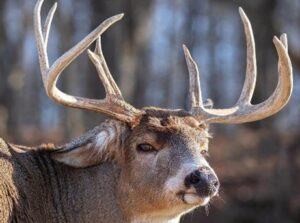
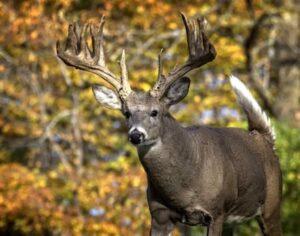
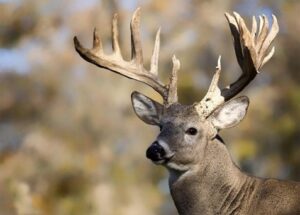
For serious deer hunters, few moments are more exciting than spotting a mature whitetail buck sporting an impressive set of antlers. But just how big is that buck? Is he a 130-class deer, a 150-class trophy, or perhaps a giant pushing 180 inches?
Knowing how to estimate antler size in the field is an invaluable skill, particularly when hunting areas with trophy management objectives or minimum antler requirements.
At Hunt Nation, we’ve spent more than 27 years helping hunters pursue exceptional hunting opportunities throughout North America and around the world. Understanding trophy scoring systems and learning how to accurately judge animals in the field can help hunters make more informed decisions and set realistic expectations.
CLICK: WHITETAIL HUNTS OFFERED BY HUNT NATION
1) Understanding the major trophy scoring systems
Not all trophy scoring systems measure or reward antlers the same way. Some emphasize symmetry, while others focus on total antler growth.
| Scoring system | Primary distinction |
| Boone & Crockett (B&C) | Recognizes North American big game; rewards size and symmetry |
| Pope & Young (P&Y) | Uses B&C-style measurements for qualifying bowhunting trophies |
| Safari Club International (SCI) | International trophy records emphasizing measurable trophy size |
| Buckmasters | Whitetail-focused, full-credit system without symmetry deductions |
Boone & Crockett Club
The Boone and Crockett Club is one of North America’s most recognized authorities on big-game trophy records.
Its scoring system considers antler length, spread, mass, and symmetry. The official net score deducts differences between corresponding antler measurements and treats abnormal points according to the typical or non-typical category.
For whitetails, it measures and includes the length of each main beam, the circumference of each main beam at four places, the length of each tine, and the inside spread, with separate categories for Typical and Non-Typical specimens. Measurements are done in inches, to the nearest eighth-of-an-inch.
For whitetail deer, its minimum entry scores are:
- Typical: 160 inches for the Awards Program and 170 inches for All-Time Records.
- Non-typical: 185 inches for the Awards Program and 195 inches for All-Time Records.
Pope & Young Club
The Pope and Young Club recognizes qualifying trophies harvested through bowhunting and uses the same basic antler measurement methodology as Boone & Crockett.
In addition, P&Y accepts racks in velvet, while B&C requires that they be stripped before scoring.
Its current whitetail minimums are 125 inches for typical deer and 145 inches for non-typical deer, with additional category requirements. The non-typical minimum was reduced effective January 2025.
Safari Club International
The Safari Club International maintains an extensive international record book covering game species from around the world.
SCI’s methods generally emphasize measurable trophy dimensions without the same symmetry deductions used in B&C’s typical scoring. Exact formulas vary by species and category, so scores from different organizations should not automatically be considered interchangeable.
SCI is also the only record book that has more than one geographic classification for whitetails (apart from the Coues sub-species. Similar to B&C, SCI has categories for Typical and Non-Typical, with the choice being up to the hunter (although a minimum of 3% of non-typical growth is required for the Non-Typical category).
Buckmasters Trophy Records
Buckmasters uses its Full-Credit Scoring System for whitetail antlers, giving credit for antler growth without deducting differences in symmetry.
A significant 2025 update added inside spread to the official score.
Consistent with the philosophy of giving credit for all antler growth, this system also does not require a minimum drying period the way the other systems do before a rack can be officially scored, thus eliminating any shrinkage factor. Buckmasters classifies all racks into four categories: Perfect, Typical, Semi-Irregular, or Irregular, and simple math determines which applies. The minimums for entry are the same for all categories, but vary for gun or bow.
2) Gross score vs. net score: What’s the difference?
One of the most common questions among deer hunters is the difference between gross and net antler scores.
Gross score generally refers to the total qualifying measurements before deductions.
Net score is the final measurement after the applicable deductions have been subtracted.
For example, a typical whitetail buck might gross 168 inches but have 11 inches of deductions for asymmetry and abnormal points. Its final B&C typical net score would be 157 inches.
This explains why two bucks with similar-looking racks can have very different official scores.
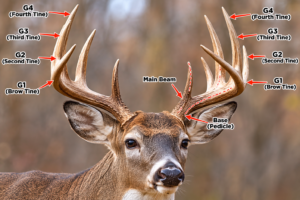
3) How to field judge a whitetail deer
A whitetail’s antler score comes primarily from five measurable characteristics:
- Inside antler spread
- Main beam lengths
- Tine lengths
- Antler mass or circumference
- Abnormal points and symmetry
The key to accurately judging a buck is evaluating each characteristic separately rather than simply looking at the overall rack and guessing.
Step 1: Estimate inside spread
One of the easiest field measurements to estimate is the inside spread between the main beams. A mature whitetail’s ears, when held outward in a relaxed position, can provide a useful visual reference. Many adult bucks have an ear-tip-to-ear-tip width around 15–17 inches, although body size and regional differences can change that measurement.
A rack extending noticeably beyond the ears may indicate an inside spread of 18–20 inches or more.
Remember, a wide buck doesn’t necessarily score higher than a narrower buck with exceptional beam length, tine length, and mass.
Step 2: Evaluate main beam length
Main beams extend from the antler bases and curve toward the tips.
Look at how far the beams project forward and whether they sweep around the face.
A buck with long, sweeping beams can accumulate substantial inches even without an exceptionally wide spread.
Step 3: Estimate tine length
Long tines are often what separate an average mature buck from a truly exceptional trophy.
Pay particular attention to the G-2 and G-3 tines, which frequently contribute significant length to the total score.
A buck with 10-inch G-2s and G-3s on both sides has a major advantage over a similar buck with 6-inch tines.
Step 4: Judge antler mass
Mass is one of the most commonly underestimated characteristics when field judging whitetails.
The Boone & Crockett system uses four circumference measurements on each antler, for a total of eight.
Heavy bases, thick beams, and circumference that carries well out toward the tips can add considerable inches to a buck’s score.
Step 5: Count points and evaluate symmetry
Count the normal points on each side and look for matching tine lengths.
A typical 10-point buck generally has five normal points per side, including the main beam tips.
Extra points, drop tines, and other abnormal growth can make a rack visually impressive, but their treatment depends on the scoring system and whether the rack is evaluated as typical or non-typical.
For the best field estimate, study the buck from both the front and side. Rear views can exaggerate the appearance of spread and tine height.
4)What does a 120-, 140-, 160-, or 180-inch whitetail look like?
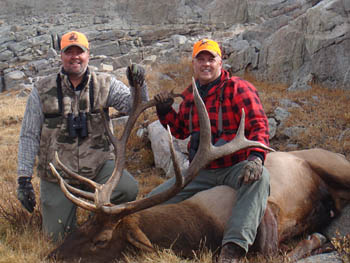
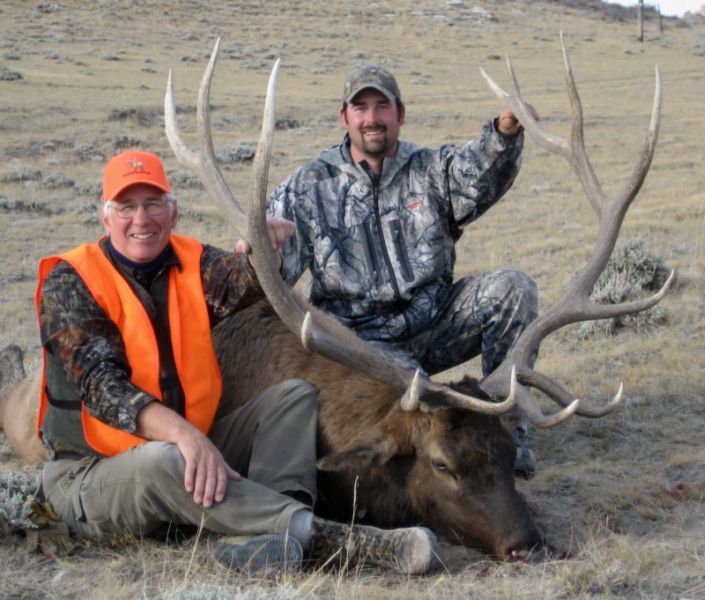
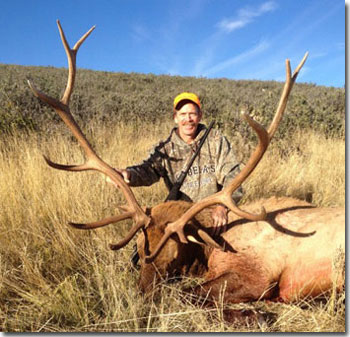
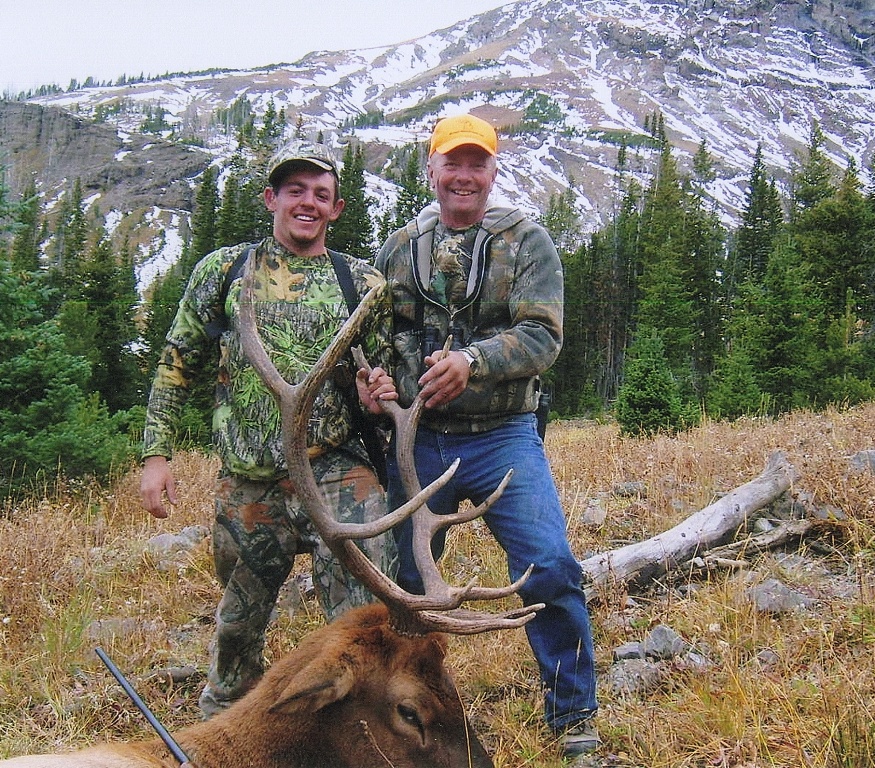
These photographs illustrate general antler characteristics, not verified scores for the individual deer pictured.
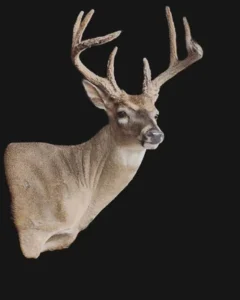
120-inch class
A respectable buck with moderate spread, average tine length, and relatively light-to-moderate mass.
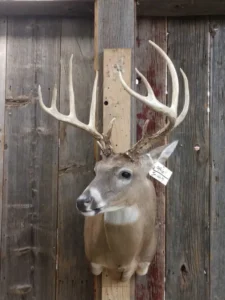
140-inch class
Typically shows stronger G-2 and G-3 tines, good main beams, and a balanced rack.
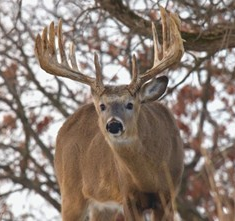
160-inch class
A trophy-quality buck combining long beams, impressive tine length, good mass, and solid spread.
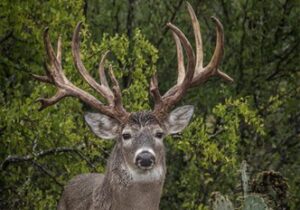
180-inch class and above
An exceptional animal with outstanding antler development across several scoring categories.
These are general descriptions, not hard-and-fast rules. A heavy, narrow 10-point can outscore a wider buck with shorter tines.
5) Field judging mistakes hunters should avoid
Even experienced hunters can misjudge antlers, especially during the excitement of a close encounter.
Common mistakes include overestimating spread, overlooking mass, confusing short main beams with long tines, and failing to distinguish abnormal points from normal points.
Another important consideration is age. A mature buck doesn’t necessarily have a high antler score, and a high-scoring buck isn’t automatically an old deer. Body proportions, neck development, belly shape, and overall appearance should be evaluated separately when estimating age.
Most importantly, once you’ve made your decision to harvest an animal, concentrate on a safe, ethical shot, rather than continuing to study the antlers.
6) How to officially score your trophy
After harvesting a whitetail, you can take preliminary measurements using a flexible steel tape or cable and an appropriate scoring chart.
For an official Boone & Crockett entry, antlers generally must complete a 60-day drying period before official measurement. Other organizations have different rules, including procedures for velvet antlers.
Useful official resources include:
- Boone & Crockett scoring sheets
- Pope & Young scoring sheets
- SCI measurement methods
- Buckmasters Full-Credit Scoring System
7) The Hunt Nation perspective: A trophy is more than a number
While trophy scoring provides a valuable way to compare antlers and document exceptional animals, the true value of a hunt extends far beyond inches.
A mature, free-ranging whitetail taken after days of challenging hunting can be every bit as meaningful as a higher-scoring buck harvested under different circumstances.
Understanding scoring systems helps hunters establish realistic goals, communicate with their outfitter, and appreciate the characteristics that make each animal unique.
Whether your goal is your first mature whitetail or a once-in-a-lifetime 170-class trophy, preparation, patience, and the right hunting opportunity make all the difference.
Looking for your next trophy whitetail adventure?
Hunt Nation works with carefully selected outfitters offering whitetail hunting opportunities across North America. Our experienced consultants can help match your goals, budget, and preferred hunting style with the right destination.
CLICK: WHITETAIL HUNTS OFFERED BY HUNT NATION