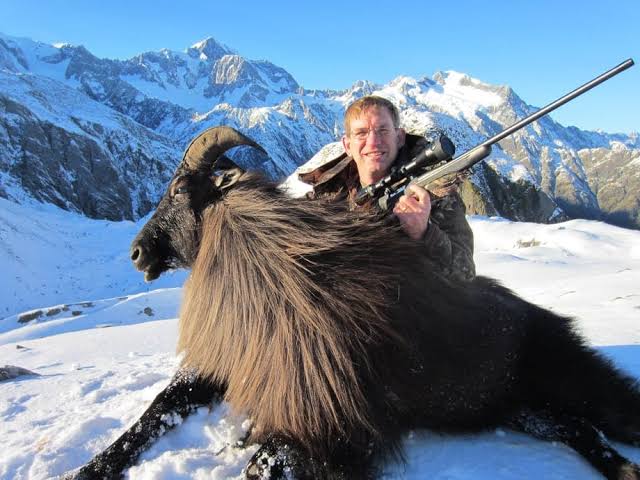
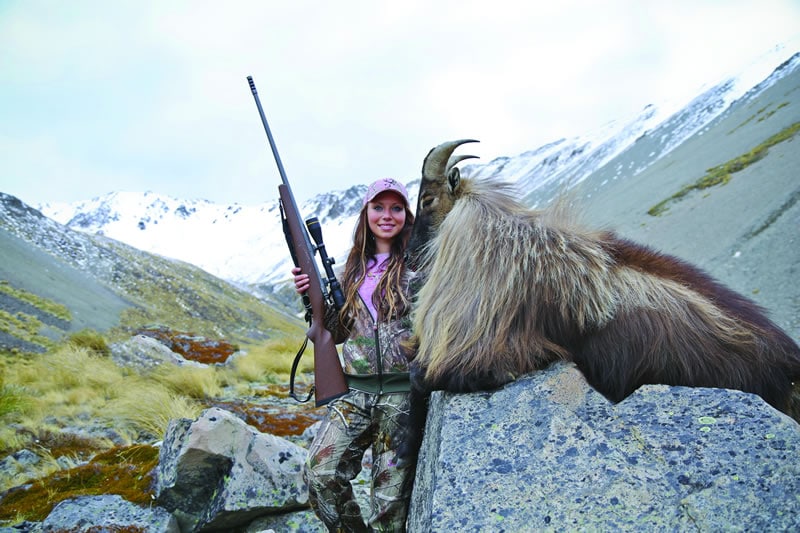
A helicopter can take you into tahr country. It cannot tell you how much walking remains after landing, whether the next slope suits your abilities or how the hunt will unfold.
That is the first distinction to understand when comparing tahr hunting in New Zealand. A private-land foot hunt, a helicopter drop-off into a remote camp and an aerially assisted trophy hunt are different experiences. All can involve hunting on the ground, but the access, schedule and costs differ.
Hunt Nation lists standalone five-day tahr packages at $7,500 and $9,500. Other offerings combine tahr with chamois or red stag. Some require no helicopter, while others offer flights at an additional charge.
Choose the hunting method first. Then compare packages that provide the experience you actually want.
Considering a tahr hunt? Contact Hunt Nation with your preferred dates, walking experience and whether you want to hunt entirely from ground access or consider a helicopter transfer. We can help you compare suitable arrangements.
Foot Hunts and Helicopter-Assisted Hunts Are Not Just Two Categories
The phrase “helicopter-assisted” does not explain enough on its own.
It may describe transport to a camp, a day-hunt drop-off or a more active role in locating animals. Before comparing prices, identify what the aircraft does and what happens after it leaves.
| Hunting arrangement | How you reach the hunting area | What happens on the ground |
|---|---|---|
| Ground-access foot hunt | Vehicle access and walking | Locate animals and stalk on foot |
| Helicopter drop-off foot hunt | Flight to a camp or hunting area | Hunt on foot after landing |
| Aerially assisted trophy hunt | Aircraft involved in searching and positioning | Ground stalking and shooting, with helicopter recovery arrangements |
A helicopter transfer to a wilderness camp does not automatically mean the aircraft is used to find your trophy.
New Zealand’s Department of Conservation describes aerially assisted trophy hunting as a distinct activity involving aerial searching, ground stalking and shooting, and helicopter recovery. The relevant authorization depends on the actual activity and location.
Ask what the package means by helicopter assistance
The useful questions are specific:
- Is the flight simply transport to and from camp?
- Will the aircraft be used to locate animals?
- How much walking is expected after landing?
- Is recovery included?
- How are flight time and additional flights charged?
A short flight does not establish a short stalk. Likewise, a ground-access hunt does not necessarily require carrying a wilderness camp from the road.
What Does a Tahr Foot Hunt Involve?
A foot hunt can begin from a cabin reached by vehicle or from a remote camp reached by helicopter.
The hunting itself depends on locating animals, evaluating the ground and making a workable approach.
Hunt Nation’s private-land mountain tahr hunt describes Land Rover access, cabin accommodation and spotting and stalking on foot. Its South Island private-land foot-hunt option also expressly states that a helicopter is not required.
Those are useful options for hunters who want a ground-based experience without assuming every tahr hunt must begin with an aircraft.
Locating a bull is the beginning of the approach
Once an animal is located, the guide has to consider more than distance.
The route must provide a suitable approach, a reliable shooting position and a practical way to reach the animal afterward. A bull that is clearly visible may still be poorly positioned for a responsible attempt.
As general preparation, become comfortable studying country through binoculars and identifying landmarks. A ridge or gully can look different once you leave the observation point.
The descent deserves attention
Hunters often prepare for climbing and overlook coming down.
Descending uneven ground can challenge knees, balance and confidence. Tell the booking team if that is a concern, even if you are comfortable walking long distances on level trails.
A realistic discussion of your abilities is more useful than describing yourself simply as “fit.”
When Does Helicopter Access Make Sense?
Helicopter access may suit a hunter who wants to reach remote country, reduce part of the access effort or spend more of a limited schedule near the hunting area.
It can also support a wilderness foot hunt by transporting equipment into camp.
Hunt Nation’s private mountain offering describes public-land wilderness arrangements where hunters and gear may be shuttled to a drop-off location and use tented spike camps.
A spike camp is a smaller camp positioned closer to the hunting ground. After arrival, the hunting can still be entirely on foot.
A drop-off does not remove mountain conditions
After landing, you may still face uneven ground, exposed positions and a demanding approach.
Do not choose helicopter access on the assumption that it removes the need for suitable boots, mountain confidence or physical preparation.
The right question is how the flight changes the route for your particular hunt.
Aircraft availability is part of the plan
One Hunt Nation listing describes starting on foot and potentially changing to helicopter assistance if needed, provided an aircraft is available.
Treat that as an option to arrange, rather than a guaranteed rescue for an unsuitable booking. If helicopter assistance is essential to your participation, make it part of the original plan.
Which Access Method Fits Your Abilities?
Age alone does not determine the answer.
A hunter with strong walking endurance may dislike steep exposure. Another may be comfortable on uneven ground but need a slower pace.
Use your recent experience to describe what you can manage.
| Your priority or concern | Arrangement to investigate |
|---|---|
| Hunting without helicopter use | Private-land ground-access foot hunt |
| Reaching a remote camp without carrying all camp equipment | Helicopter drop-off followed by foot hunting |
| Limited time for accessing higher country | A specifically planned helicopter-assisted option |
| Preference for a cabin | Vehicle-access private-land package |
| Desire for a remote tent-camp experience | Wilderness package with its access arrangements clearly stated |
| Difficulty with steep descents | A route and property matched to your ability, regardless of access method |
None of these choices guarantees easier shooting or a harvest.
Describe limitations before selecting the package
Explain whether you have concerns about knees, balance, heights, prolonged climbing or carrying equipment.
Ask about the ground after access, not just the transport into the area.
The private mountain listing describes flexibility for different abilities. That should lead to a tailored discussion, rather than a blanket promise that any hunter can comfortably complete any route.
When Should You Hunt Tahr in New Zealand?
Timing depends on what matters most to you: tahr coat quality, mountain conditions or a combination with another species.
The supplied Hunt Nation pages generally emphasize later autumn and winter for fuller tahr hair. Several recommend May onward, while the private mountain offering describes April through August as its preferred hair-quality period.
These are recommendations within individual offerings, rather than a universal legal season calendar.
For a coat-focused tahr hunt
If the long mane and winter coat are major reasons for your trip, select dates around that priority.
Do not choose an earlier stag-focused visit and assume the tahr will necessarily have the same coat you saw in a winter photograph.
For a red stag and tahr combination
The red stag roar and the fullest tahr coat do not have identical timing.
Client listings describe the stag roar around March and April, with later dates favored for tahr hair quality. An April combination may represent a compromise; a later tahr-focused trip serves a different preference.
The walking tahr and red stag combination discusses this timing trade-off.
Keep mountain days flexible
One listing expressly states that the order of a combination hunt depends on weather.
Build that flexibility into your expectations. A fixed plan to hunt tahr on one particular day may not suit the conditions when you arrive.
How Much Does Tahr Hunting in New Zealand Cost?
Compare complete packages separately from additional trophy fees and flight charges.
A tahr trophy fee added to a stag package is not the price of a standalone tahr trip.
| Offering | Published price | Duration | What the price describes |
|---|---|---|---|
| Private-land tahr foot hunt | $7,500 | Five days, four nights | Standalone free-range private-land tahr package; no helicopter required |
| Private mountain tahr hunt | $9,500 | Five days | One hunter with one guide |
| Private mountain tahr hunt with shared guiding | $8,250 per hunter | Five days | Two hunters sharing one guide; $16,500 total |
| Tahr and chamois combination | $12,000 | Five days, five nights | Two-species package; optional helicopter additional |
| Walking tahr and red stag combination | $13,000 | Five days | Two-species package with tahr hunted on foot |
| Tahr addition to a red stag trip | $6,500 | Depends on the booked itinerary | Additional tahr trophy fee, not a standalone package |
These are published listing amounts. The written reservation should identify your selected package, dates and final inclusions.
What the standalone packages include
The $7,500 private-land package lists guiding, accommodation, meals, trophy fees, airport transfers, transport during the hunt, field trophy preparation and use of a firearm and ammunition.
The private mountain offering includes tax and describes accommodation, meals, transfers, permits, trophy fees and professional guiding within its package inclusions.
Its qualifying public-land arrangements also describe helicopter transfers into and out of hunting areas when required. That does not turn every private-land package into an aerially assisted hunt.
Additional tahr fees need context
The red stag offering lists a $6,500 tahr trophy fee, helicopter assistance at $2,200 per flight hour and additional guided hunting days at $700.
If extra days or flights are needed, the trophy fee alone will not describe the added expense.
How Should You Budget for Helicopter Time?
First identify whether flights are included, optional or required for the selected itinerary.
Then establish what the charge covers.
Client listings use different structures. One quotes hourly helicopter hire at $1,750. Another lists $2,200 per flight hour. The walking tahr combination describes an approximate example using 1.5 hours at $1,450 per hour.
Those figures belong to different operations. They are not interchangeable rates.
A flight estimate is not a fixed surcharge
At $1,450 per hour, 1.5 hours calculates to $2,175.
That is an arithmetic example based on the listing, not a promise that your flight will last that long or cost that amount.
Shared flight costs also depend on the actual arrangement. Do not divide a figure between two hunters unless the quotation states that the cost can be shared that way.
Get one clear flight allowance in writing
The optional-helicopter tahr and chamois page contains different approximate helicopter budgets in different sections.
Rather than treating either as a fixed price, obtain a quotation that identifies:
- What flying activity is included.
- The rate or fixed allowance.
- Whether the amount is per hunter or shared.
- What triggers additional charges.
- How changed weather or additional flights affect the booking.
Weather, Camp Style and Recovery Change the Experience
A cabin, a tent camp and a lodge-based helicopter outing provide different daily routines.
These differences belong in the access decision.
Cabin-based foot hunting
A cabin reached by vehicle may suit someone who wants to hunt on foot while keeping the camp arrangements relatively settled.
It still does not establish that every hunting route is gentle or close to the cabin.
Wilderness tent camps
A helicopter can carry camp equipment into remote country, allowing hunters to begin their foot hunt from a different position.
Ask what personal equipment you must carry during each day and what remains at camp.
Weather delays
Mountain hunting and flight schedules need room for changed conditions.
Understand what happens if the aircraft cannot operate or the intended ground is unsuitable. The supplied pages do not establish one cancellation or refund policy covering every outfitter.
Review the booking terms alongside Hunt Nation’s travel insurance information. Insurance protection depends on the individual policy.
Reaching the animal after the shot
Recovery is a separate consideration from finding a shooting position.
Follow the guide’s assessment of where an animal can be responsibly taken and reached. A visible bull on difficult ground is not automatically a suitable opportunity.
Preparing for a Tahr Foot Hunt
The following is general preparation advice, rather than a required training standard for every package.
Train for climbing and descending
Use regular walking, manageable hills and progressive pack work suited to your ability.
Include controlled descents rather than doing every session on flat ground. Simple strength and balance exercises can also help prepare for uneven footing.
Increase activity gradually. Discuss a substantial change in exercise with your clinician if you have a relevant medical condition.
Test your boots early
A supplied Hunt Nation listing specifically emphasizes firm-soled boots with ankle support for rough mountain ground.
Wear your intended boots before departure. Test them on slopes and check for heel movement, pressure points and comfort during descents.
Practice from supported positions
Use a suitable range to become comfortable with the equipment and field supports you intend to use.
Know your reliable limit. A guide’s ability to locate a bull at distance does not establish your ability to make that shot.
If using an outfitter rifle, allow time for familiarization and the agreed shooting checks.
What Equipment Matters Most?
Start with Hunt Nation’s gear list, then tailor it to the booked hunt.
The cabin-based hunter and the wilderness-camp hunter may not need identical personal equipment.
Prioritize:
- Suitable mountain boots.
- Layered clothing.
- Wind and rain protection.
- Binoculars and a comfortable carrying system.
- A daypack suited to the agreed load.
- Gloves, headwear and essential personal items.
- Any camp equipment identified by the outfitter.
The walking tahr listing stresses layered clothing and avoiding cotton. Do not turn a general temperature description into a weather guarantee for every month or elevation.
Some offerings provide firearms, but provision and rental arrangements differ. Bringing your own firearm involves separate current requirements that must be addressed before departure.
Free Range, Access and Trophy Expectations
Access method and hunting status answer different questions.
“Free range” describes the animals and hunting arrangement. “Helicopter access” describes transport or a broader method, depending on the booking.
A helicopter drop-off can lead to a ground-based wilderness hunt. A vehicle-access hunt can also be free range.
Some supplied pages advertise both estate and free-range opportunities. Read the description for the selected tahr package rather than applying the status of a red stag offering to every species.
Historical success figures are also not guarantees. Past trophy measurements can describe results without establishing the size of the bull you will encounter.
Questions That Settle the Choice
Before paying, make sure the booking clearly answers:
- How do we reach the hunting ground?
- What role does the helicopter play?
- How much ground hunting is expected afterward?
- Which physical limitations can the arrangement accommodate?
- What camp will we use?
- How are weather changes handled?
- What package services, flights and trophy work are included?
Choose the arrangement that fits the experience you want to complete, rather than the one that sounds easiest in a short description.
Frequently Asked Questions
Can you hunt tahr in New Zealand without a helicopter?
Yes. Hunt Nation lists private-land foot hunts using vehicle access, with no helicopter required.
Does helicopter-assisted access mean shooting from the aircraft?
Not necessarily. A flight may simply transport hunters to camp or an access point. The described trophy-hunting arrangements involve ground stalking and shooting. Establish the aircraft’s exact role before booking.
How much does a guided tahr hunt cost?
The standalone packages discussed here list $7,500 and $9,500. A shared-guide private mountain option lists $8,250 per hunter. Flights and other inclusions vary.
Does a helicopter remove the need for fitness?
No. It may reduce access effort, but walking and mountain terrain can remain after landing.
When is the best time for tahr coat quality?
The client offerings generally favor autumn and winter, with several emphasizing May onward. Select dates around your trophy and combination priorities.
Can I combine tahr with red stag or chamois?
Yes. Hunt Nation lists both combinations. Check each species’ access method because a package may include foot hunting for one and a helicopter transfer for another.
Is helicopter time always extra?
No. Some wilderness arrangements include specified transfers. Other packages charge flights separately.
Can I start on foot and add a helicopter later?
One listing describes that possibility subject to availability. If flying is essential, arrange it before the hunt.
Choose the Tahr Hunt That Fits You
A ground-access cabin hunt, a fly-in wilderness foot hunt and an aerially assisted outing provide different experiences.
Start with your mountain confidence, available time and preferred style. Then compare the complete package and flight arrangements.
To discuss tahr hunting in New Zealand, call 307-637-5495, email info@hunt-nation.com, or contact Hunt Nation. Share your preferred dates, recent walking experience and whether tahr is your main objective or part of a combination trip.